WCH Research Team Publishes study in Cell, Revealing New Mechanism for Treating Neuroendocrine Cancers
A research team from West China Hospital, Sichuan University (WCHSCU), in collaboration with the Affiliated Hospital of Chengdu University of Traditional Chinese Medicine, published a study online in Cell titled "A Blood-Brain Barrier–like Vascular Gate Limits Immunotherapy Efficacy in Neuroendocrine Cancers." The WCH team included Prof. Chen Chong and Prof.Liu Yu from the State Key Laboratory of Biotherapy, Associate Prof. Na Feifei from the Cancer Center, and Prof. Zhang Yan from the Lung Cancer Center.
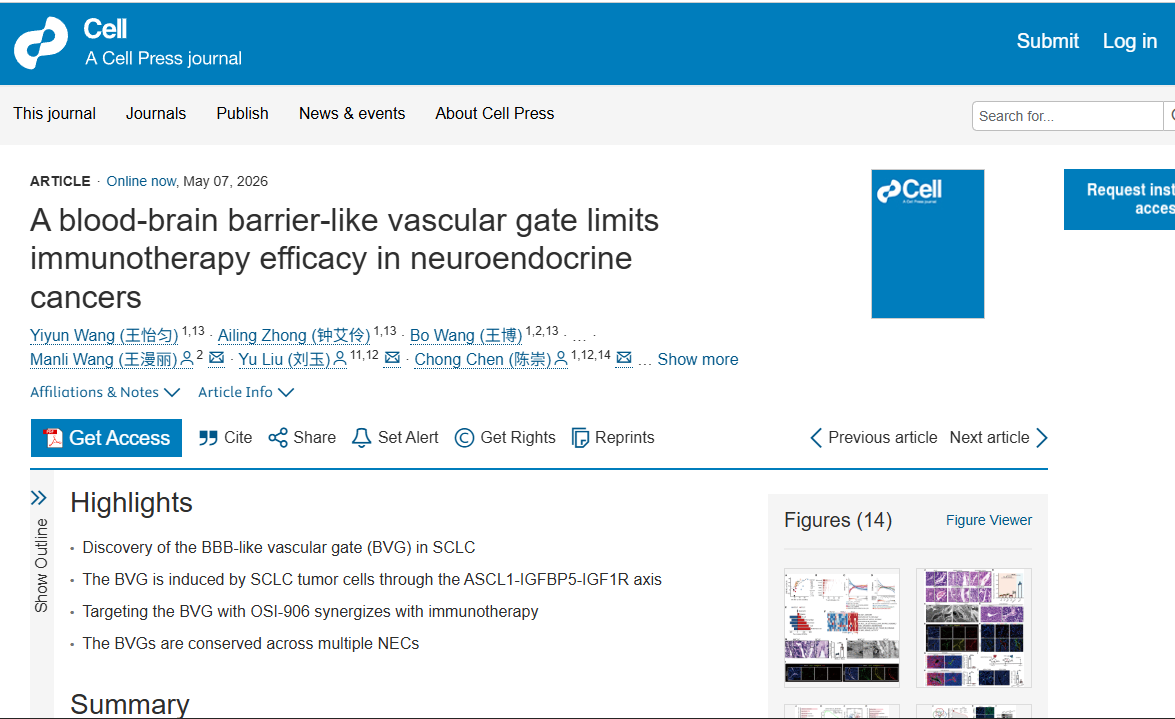
Neuroendocrine neoplasms (NENs) are malignant tumors with distinct pathological features and generally poor prognosis. Among them, small cell lung cancer (SCLC) is the most aggressive and has the highest incidence rate. SCLC accounts for approximately 15% to 20% of all lung cancers. The disease progresses rapidly, metastasizes early, and carries a very poor prognosis, with a five-year survival rate below 10%. SCLC is also a typical "cold tumor" that responds poorly to immunotherapy. However, the underlying mechanisms remain unclear, and there is a lack of effective sensitization strategies in clinical practice.
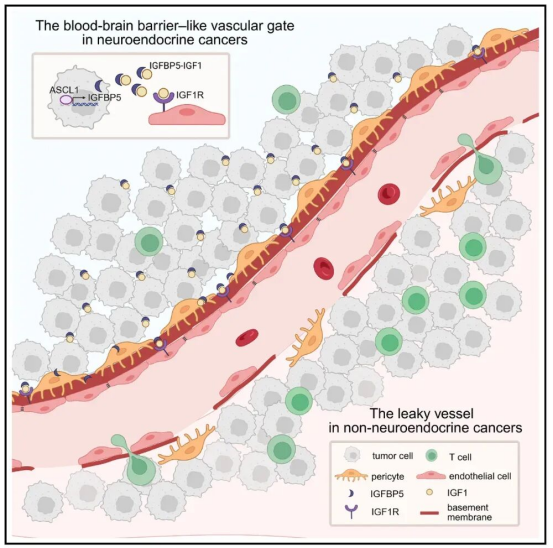
The study found that a special vascular structure exists in neuroendocrine cancers, including SCLC. This structure acts as a key "gate" that prevents immune cells from entering tumor tissue. Targeting this structure significantly improved the efficacy of immunotherapy. The research not only identified a novel tumor vascular structure, termed the blood-brain barrier–like vascular gate (BVG), and its molecular regulatory mechanism, but also revealed a new reason for the poor response to immunotherapy in SCLC and other neuroendocrine cancers. These findings provide a new perspective for clinical intervention in these malignancies.
Paper Link: https://www.cell.com/cell/abstract/S0092-8674(26)00452-6
(Source: https://en.scu.edu.cn/info/1030/3019.htm)